


The Role of Data Catalogs in Accelerating AI Initiatives

The Role of Data Catalogs in Accelerating AI Initiatives

In today’s data-driven landscape, organizations increasingly rely on AI to gain insights, drive innovation, and maintain a competitive edge. Indeed, AI technologies, including machine learning, natural language processing, and predictive analytics, transform businesses’ operations, enabling them to make smarter decisions, automate processes, and uncover new opportunities. However, the success of AI initiatives depends significantly on the quality, accessibility, and efficient management of data.

This is where the implementation of a data catalog plays a crucial role.

By facilitating data governance, discoverability, and accessibility, data catalogs enable organizations to harness the full potential of their AI projects, ensuring that AI models are built on a solid foundation of accurate and well-curated data.

First: What is a data catalog?


A data catalog is a centralized repository that stores metadata—data about data—allowing organizations to manage their data assets more effectively. This metadata collected by various data sources is automatically scanned to enable catalog users to search for their data and get information such as the availability, freshness, and quality of a data asset.

Therefore, by definition, a data catalog has become a standard for efficient metadata management and data discovery. At Zeenea, we broadly define a data catalog as being:

A detailed inventory of all data assets in an organization and their metadata, designed to help data professionals quickly find the most appropriate data for any analytical business purpose.

How does implementing a data catalog boost AI initiatives in organizations?


Now that we’ve briefly defined what a data catalog is, let’s discover how data catalogs can significantly boost AI initiatives in organizations:

Enhanced Data Discovery


The success of AI models is determined by the ability to access and utilize large, diverse datasets that accurately represent the problem domain. A data catalog enables this success by offering robust search and filtering capabilities, allowing users to quickly find relevant datasets based on criteria such as keywords, tags, data sources, and any other semantic information provided. These Google-esque search features enable data users to efficiently navigate the organization’s data landscape and find the assets they need for their specific use cases.

For example, a data scientist working on a predictive maintenance model for manufacturing equipment can use a data catalog to locate historical maintenance records, sensor data, and operational logs. This enhanced data discovery is crucial for AI projects, as it enables data scientists to identify and retrieve the most appropriate datasets for training and validating their models.


💡The Zeenea difference: Get highly personalized discovery experiences with Zeenea! Our platform enables data consumers to enjoy a unique discovery experience via personalized exploratory paths by ensuring that the user profile is taken into account when ranking the results in the catalog. Our algorithms also give smart recommendations and suggestions on your assets day after day.


View our data discovery features.

Improved Data Quality and Trustworthiness


The underlying data must be of high quality for AI models to deliver accurate and reliable results. High-quality data is crucial because it directly impacts the model’s ability to learn and make predictions that reflect real-world scenarios. Poor-quality data can lead to incorrect conclusions and unreliable outputs, negatively affecting business decisions and outcomes.

A data catalog typically includes features for data profiling and data quality assessment. These features help identify data quality issues such as missing values, inconsistencies, and outliers, which can skew AI model results. By ensuring that only clean and trustworthy data is used in AI initiatives, organizations can enhance the reliability and performance of their AI models.


💡The Zeenea difference: Zeenea uses GraphQL and knowledge graph technologies to provide a flexible approach to integrating best-of-breed data quality solutions into our catalog. Sync the datasets of your third-party DQM tools via simple API operations. Our powerful Catalog API capabilities will automatically update any modifications made in your tool directly within our platform.


View our data quality features.

Improved data governance and compliance


Data governance is critical for maintaining data integrity, security, and compliance with regulatory requirements. It involves the processes, policies, and standards that ensure data is managed and used correctly throughout its lifecycle. Regulatory requirements such as the GDPR in Europe and the CCPA in California, United States are examples of stringent laws that organizations must adhere to.

In addition, data governance promotes transparency, accountability, and traceability of data, making it easier for stakeholders to spot errors and mitigate risks associated with flawed or misrepresented AI insights before they negatively impact business operations or damage the organization’s reputation. Data catalogs support these governance initiatives by providing detailed metadata, including data lineage, ownership, and usage policies.

For AI initiatives, robust data governance means data can be used responsibly and ethically, minimizing data breaches and non-compliance risks. This protects the organization legally and ethically and builds trust with customers and stakeholders, ensuring that AI initiatives are sustainable and credible.


💡The Zeenea difference: Zeenea guarantees regulatory compliance by automatically identifying, classifying, and managing personal data assets at scale. Through smart recommendations, our solution detects personal information. It suggests which assets to tag – ensuring that information about data policies and regulations is well communicated to all data consumers within the organization in their daily activities.


View our data governance features.

Collaboration and knowledge sharing


AI projects often involve cross-functional teams, including data scientists, engineers, analysts, and business stakeholders. Data catalogs are pivotal in promoting collaboration by serving as a shared platform where team members can document, share, and discuss data assets. Features such as annotations, comments, and data ratings enable users to contribute their insights and knowledge directly within the data catalog. This functionality fosters a collaborative environment where stakeholders can exchange ideas, provide feedback, and iterate on data-related tasks.

For example, data scientists can annotate datasets with information about data quality or specific characteristics functional for machine learning models. Engineers can leave comments regarding data integration requirements or technical considerations. Analysts can rate the relevance or usefulness of different datasets based on their analytical needs.


💡The Zeenea difference: Zeenea provides discussion tabs for each catalog object, facilitating effective communication between Data Stewards and data consumers regarding their data assets. Shortly, data users will also be able to provide suggestions regarding the content of their assets, ensuring continuous improvement and maintaining the highest quality of data documentation within the catalog.

Common understanding of enterprise-wide AI terms


Data catalogs often incorporate a business glossary, a centralized repository for defining and standardizing business terms and data & AI definitions across an organization. A business glossary enhances alignment between business stakeholders and data practitioners by establishing clear definitions and ensuring consistency in terminology.

This clarity is essential in AI initiatives, where precise understanding and interpretation of data are critical for developing accurate models. For example, a well-defined business glossary allows data scientists to quickly identify and utilize the right data sets for training AI models, reducing the time spent on data preparation and increasing productivity. By facilitating a common understanding of data across departments, a business glossary accelerates AI development cycles and empowers organizations to derive meaningful insights from their data landscape.


💡The Zeenea difference: Zeenea provides data management teams with a unique place to create their categories of semantic concepts, organize them in hierarchies, and configure the way glossary items are mapped with technical assets.


View our Business Glossary features.

In conclusion


In the rapidly evolving landscape of AI-driven decision-making, data catalogs have emerged as indispensable tools for organizations striving to leverage their data assets effectively. They ensure that AI initiatives are built on a foundation of high-quality, well-governed, well-documented data, which is essential for achieving accurate insights and sustainable business outcomes.

As organizations continue to invest in AI capabilities, adopting robust data catalogs will play a pivotal role in maximizing the value of data assets, driving innovation, and maintaining competitive advantage in an increasingly data-centric world.

Why is a Data Catalog essential for Data Product Management?

Why is a Data Catalog essential for Data Product Management?

Data Mesh is one of the hottest topics in the data space. In fact, according to a recent BARC Survey, 54% of companies are planning to implement or are implementing the Data Mesh in their companies. Implementing Data Mesh architecture in your enterprise means incorporating a domain-centric approach to data and treating data as a product. Data Product Management is therefore crucial in the Data Mesh transformation process. Eckerson Group Survey 2024 found that 70% of organizations have or are in the process of implementing Data Products.

However, many companies are struggling to manage, maintain, and get value out of their data products. Indeed, successful Data Product Management requires establishing the right people, processes, and technologies. One of those essential technologies is a data catalog.

In this article, discover how a data catalog empowers data product management in data-driven companies.

Quick definition of a Data Product


In a previous article on Data Products, we detailed the definition and characteristics of Data Products. At Zeenea, we define a Data Product as being:

“A set of value-driven data assets specifically designed and managed to be consumed quickly and securely while ensuring the highest level of quality, availability, and compliance with regulations and internal policies.”

Let’s get a refresher on the characteristics of a Data Product. According to Zhamak Dehghani, the Data Mesh guru, to deliver the best user experience for data consumers, data products need to have the following basic qualities:

  • Discoverable
  • Addressable
  • Trustworthy and truthful
  • Self-describing semantics and syntax
  • Inter-operable and governed by global standards
  • Secure and governed by a global access control

How can you ensure your sets of data meet the criteria for becoming a functional and value-driven Data Product? This is where a data catalog comes in.

What exactly is a data catalog?


Many definitions exist of what a data catalog is. At Zeenea, we define it as “A detailed inventory of all data assets in an organization and their metadata, designed to help data professionals quickly find the most appropriate data for any analytical business purpose.” Basically, a data catalog’s goal is to create a comprehensive library of all company data assets, including their origins, definitions, and relations to other data. And like a catalog for books in a library, data catalogs make it easy to search, find, and discover data.

Therefore, in an ecosystem where volumes of data are multiplying and changing by the second, it is crucial to implement a data cataloging solution – a data catalog answers the who, what, when, where, and why of your data.

But, how does this relate to data products? As mentioned in our previous paragraph, data products have fundamental characteristics that they must meet to be considered data products. Most importantly, they must be understandable, accessible, and made available for consumer use. Therefore, a data catalog is the perfect solution for creating and maintaining data products.

View our Data Catalog capabilities

A data catalog makes data products discoverable


A data catalog collects, indexes, and updates data and metadata from all data sources into a unique repository. Via an intuitive search bar, data catalogs make it simple to find data products by typing simple keywords.

In Zeenea, our data catalog enables data users to not only find their data products but to fully discover their context, including their origin and transformations over time, their owners, and most importantly, to which other assets it is linked for a 360° data discovery. Zeenea was designed so users can always discover their data products, even if they don’t know what they are searching for. Indeed, our platform offers unique and personalized exploratory paths so users can search and find the information they need in just a few clicks.

View our Data Discovery capabilities

A data catalog makes data products addressable


Once a data consumer has found the data product, they must be able to access it or request access to it in a simple, easy, and efficient way. Although a data catalog doesn’t play a direct role in addressability, it certainly can facilitate and automate part of the work. An automated Data Catalog solution plugs into policy enforcement solutions, accelerating data access (if the user has the appropriate permissions).

A data catalog makes data products trustworthy


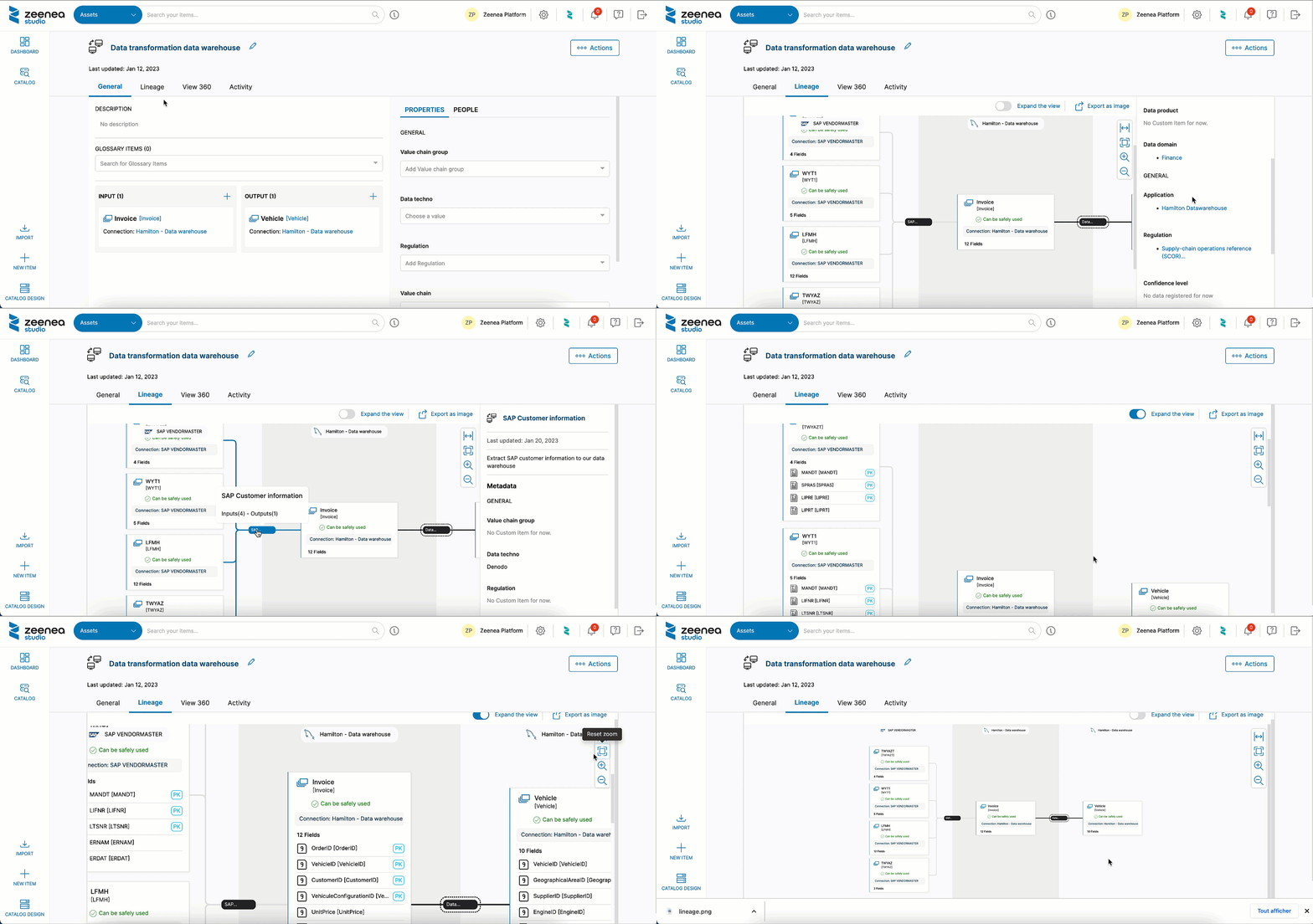
At Zeenea, we strongly believe that a data catalog is not a data quality tool. However, our catalog solution automatically retrieves and updates quality indicators from third-party data quality management systems. With Zeenea, users can view their quality metrics via a user-friendly graph and instantly identify the quality checks that were performed, their quantity, and whether they passed, failed, or issued warnings. In addition, our Lineage capabilities provide statistical information on the data and reconstruct the lineage of the data product, making it easy to understand the origin and the various transformations over time. These features combined increase trust in data and ensure data users are always working with accurate data products.

View our Data Compliance capabilities

A data catalog makes data products understandable


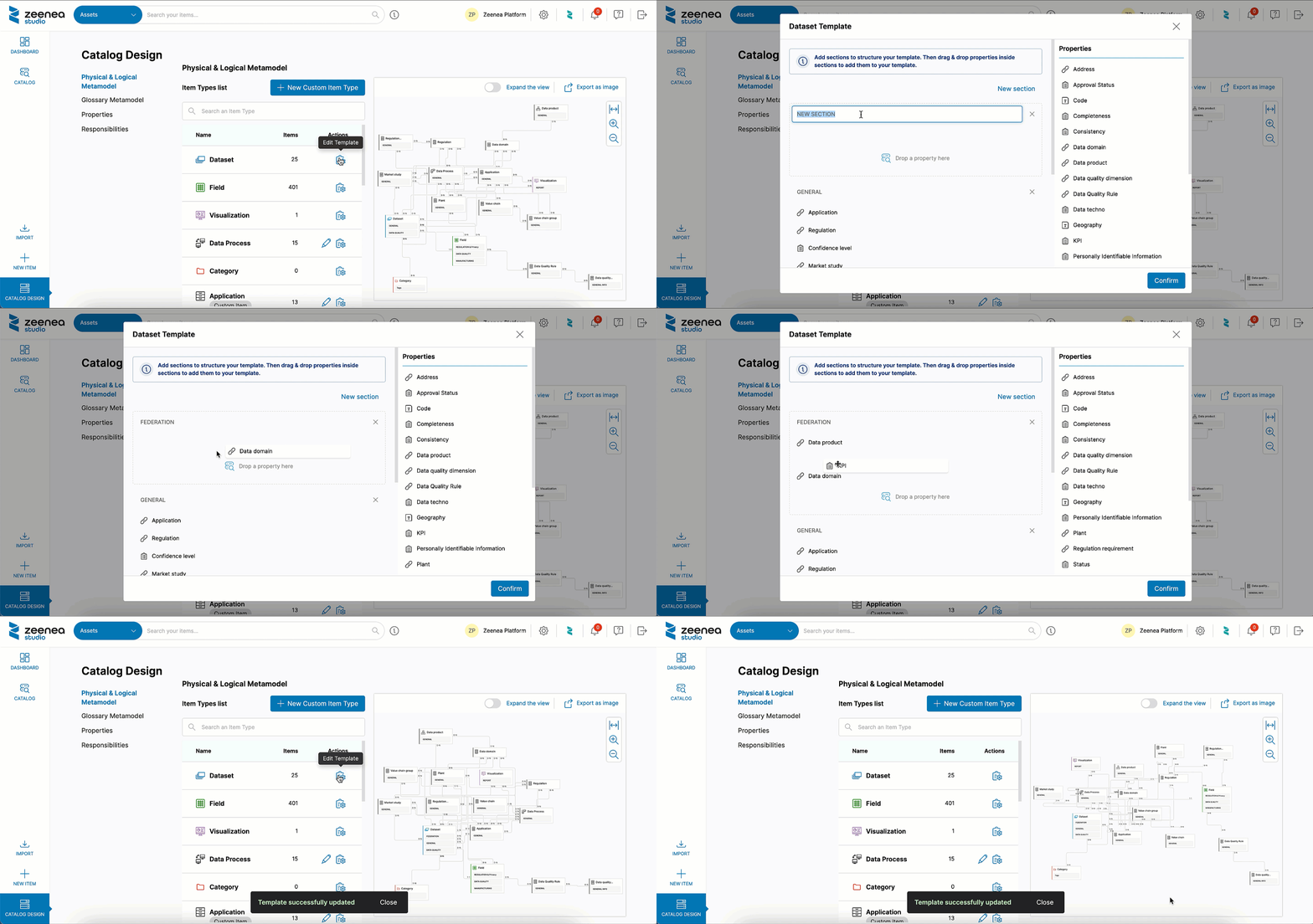
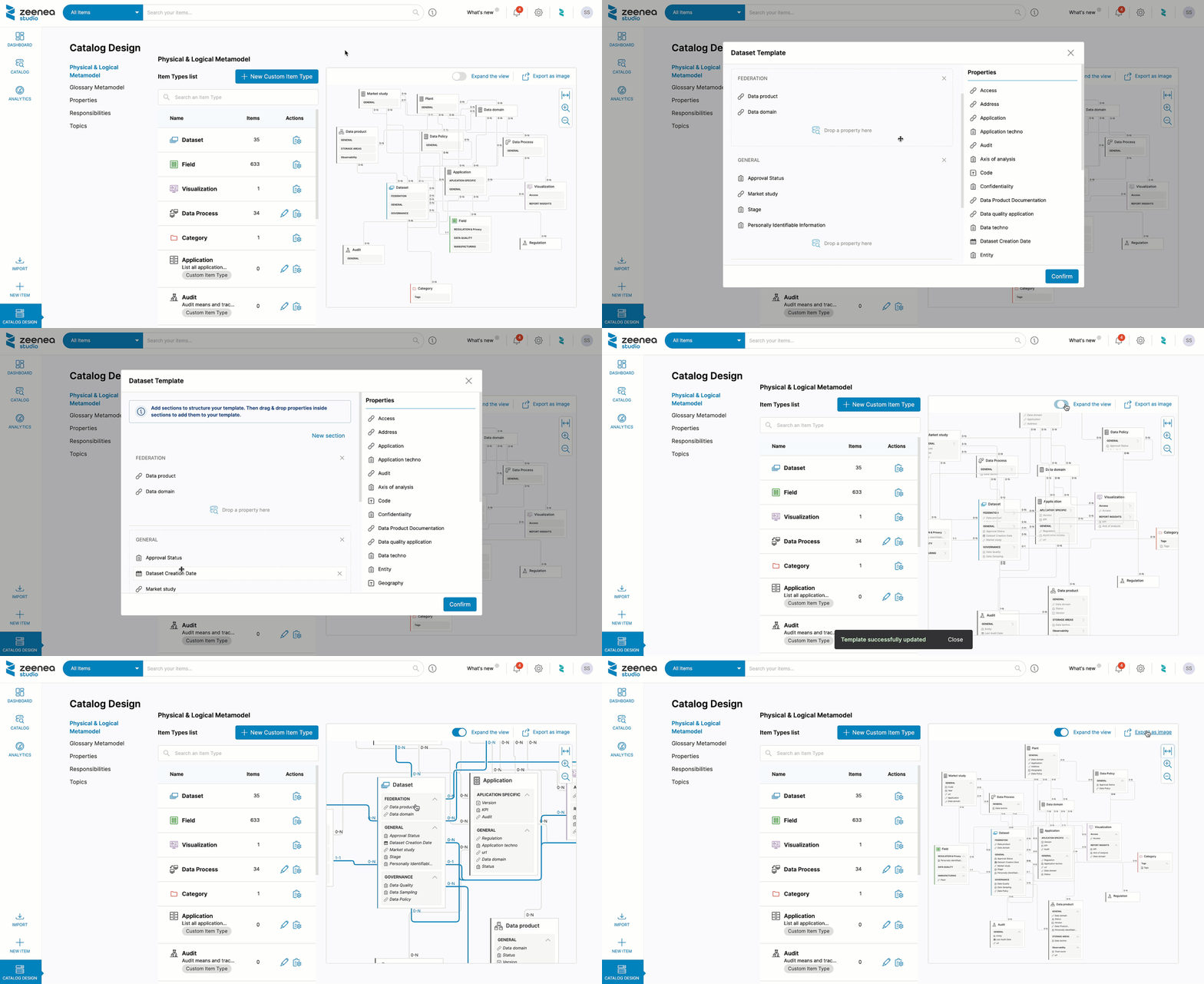
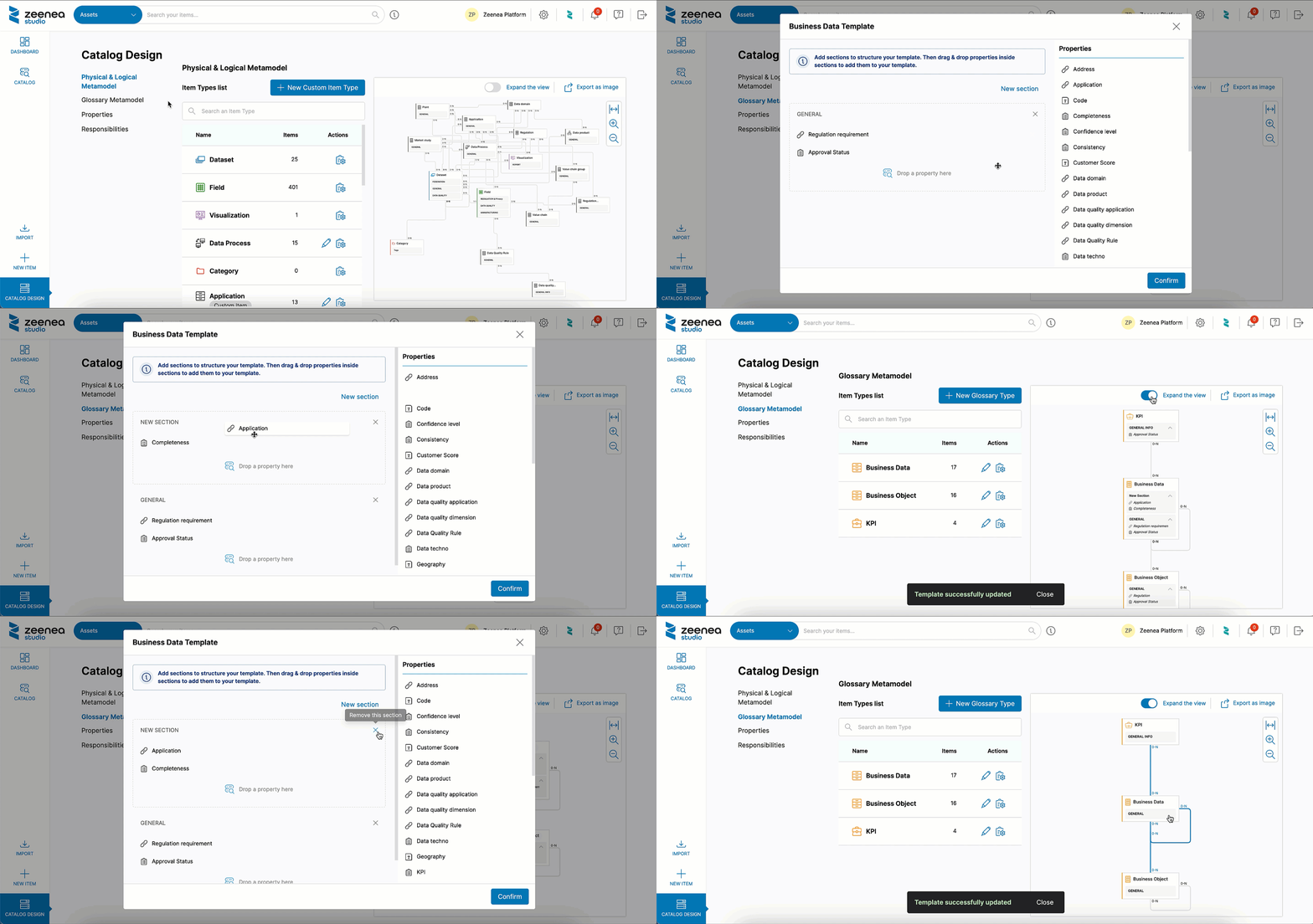
One of the most significant roles of a data catalog is to provide all the context necessary to understand the data. By efficiently documenting data, with both technical and business documentation, data consumers can easily comprehend the nature of their data and draw conclusions from their analyses. In Zeenea, Data Stewards can easily create documentation templates for their Data Products and thoroughly document them, including detailed descriptions, associating Glossary Items, relationships with other Data Products, and more. By delivering a structured and transparent view of your data, Zeenea’s data catalog promotes the autonomous use of Data Products by data consumers in the organization.

View our Data Stewardship Capabilities

A data catalog enables data product interoperability


With comprehensive documentation, a data catalog facilitates data product integration across various systems and platforms. It provides a clear view of data product dependencies and relationships between different technologies, ensuring the sharing of standards across the organization. In addition, a data catalog maintains a unified metadata repository, containing standardized definitions, formats, and semantics for various data assets. In Zeenea, our platform is built on powerful knowledge graph technology that automatically identifies, classifies, and tracks data products based on contextual factors, mapping data assets to meet the standards defined at the enterprise level.

View our Knowledge Graph capabilities

A data catalog enables data product security


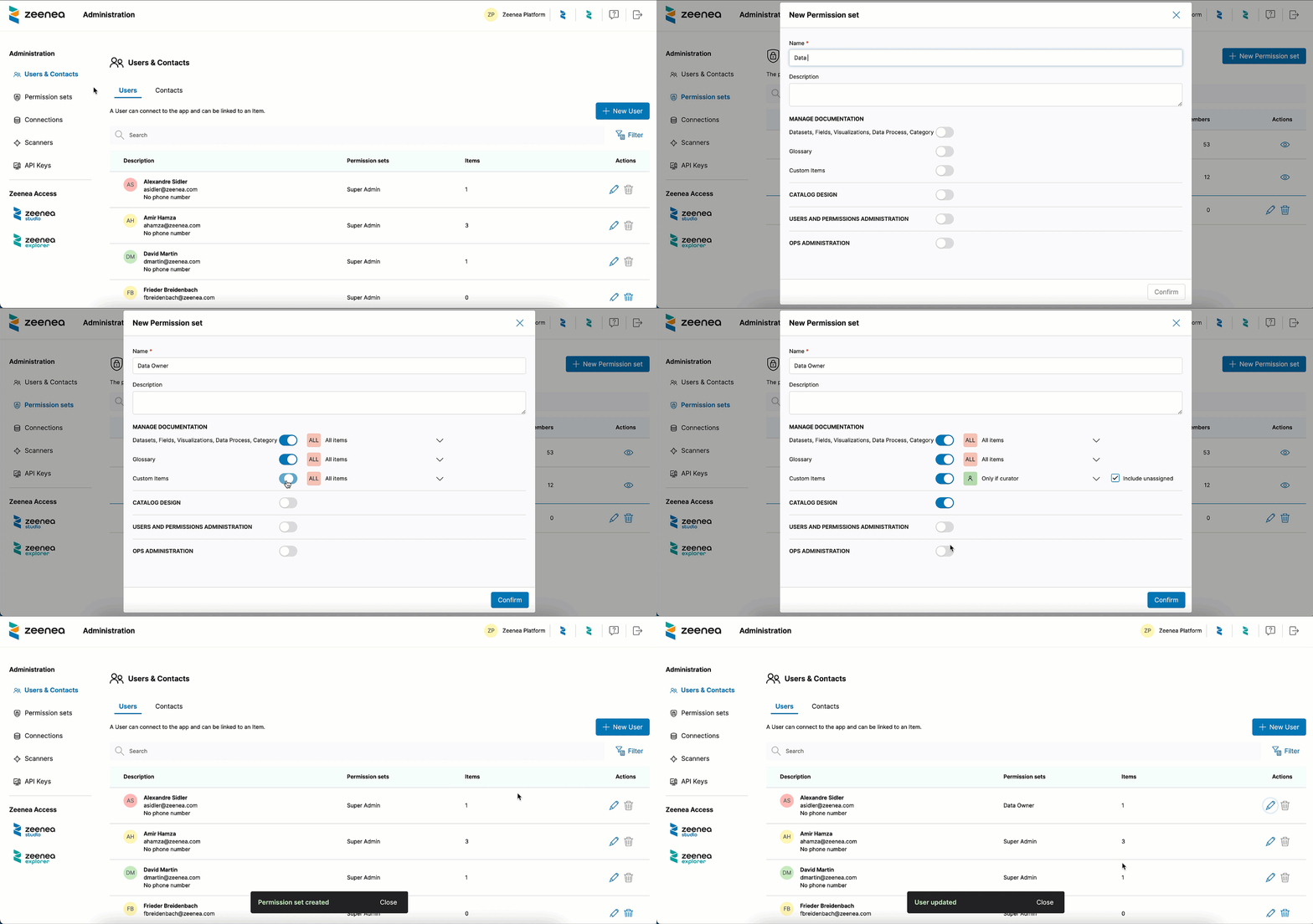
A data catalog typically includes robust access control mechanisms that allow organizations to define and manage user permissions. This ensures that only authorized personnel have access to sensitive metadata, reducing the risk of unauthorized access or breaches. In Zeenea, you create a secure data catalog, where only the right people can act on a data product’s documentation.

View our Permission management model

Start managing Data Products in Zeenea


Interested in learning more about how Data Product Management works in Zeenea? Get a 30-minute personalized demo with one of our experts now!

In the meantime, check out our Data Product Management feature note


4 best practices for your ESG data strategy

4 best practices for your ESG data strategy

Environmental, Social, and Governance (ESG) is a central topic for CDOs, CFOs, and data managers. In this article, discover the best practices to deploy in your company to deliver effective ESG data reporting.

With massive fires, floods, and major heat waves, 2022 marked a turning point in the global climate crisis. It raises awareness and leads companies (and society as a whole) to act in a more responsible and sustainable way. More than a simple trend, the deployment of a relevant ESG strategy is a major challenge for companies.

ESG criteria are used to analyze and evaluate the consideration of sustainable development and long-term issues in corporate strategy. This directly affects the way you manage, administer and operate your data assets. For a long time, ESG governance was based on simple communication, but it is now based on evidence. Evidence that is fed by ESG data.

Investors, partners, customers, and the public at large are now demanding real transparency not only on how organizations are protecting and effectively using data to create value but also on how they are achieving long-term sustainability by focusing on corporate social responsibility and environmental impact as applied to data management.

What is the role of ESG data in companies?

Because companies must demonstrate their commitments to sustainability through facts, ESG data plays a key role. This data is analyzed by independent financial rating agencies that ensure the veracity of companies’ claims. The information declared is cross-checked with other sources from non-governmental organizations, associations, or institutions. ESG data then results in an accurate assessment of a company’s ESG practices within a given industry.

What are the best practices for successful ESG data reporting?

The preparation of efficient and relevant ESG data reporting relies on a precise and demanding methodology. The challenge is to quickly collect the information required for ESG reporting and ensure optimal traceability and rigorous security. To meet the challenge, we must be able to apply a number of good practices.

Centralize data in one place

The foundation for transparent ESG data reporting is the ability to centralize all data in a single location for collection and processing. This centralization is an essential prerequisite for data governance that represents the spirit that drives your company.

Guarantee data traceability (data lineage)

Because the heart of sincere ESG data reporting is data traceability, you must implement a data lineage tool. The latter ensures real-time tracking of data and acts as an aid within your company to ensure that your data emanates from a reliable and controlled source; that the transformations it may have undergone are known, tracked, and legitimate; and that it is available in the right place, at the right time and for the right user.

Implement a data governance policy

Quality, reliability, traceability. These are the three pillars that guarantee the veracity of your ESG data and demonstrate your commitment to sustainable development. These three pillars are united around a key issue: a true data governance policy. Data governance is the overall management of the availability, usability, integrity, and security of data used in your business.

Democratize data access for all (data literacy)

One of the major challenges in guaranteeing the reliability, security, and transparency of ESG data is to ensure that all stakeholders within the company rely on a strong data culture. This data culture allows each employee to position themselves as an essential link in the data quality chain by claiming the ability to identify, process, analyze and interpret data. Also known as Data Literacy, this data culture allows the development of a critical mindset that gives the company’s data its full value.